
Enabling High-Throughput, Low-Cost Genomic Solutions with MEMS and Advanced Processing
Authors: Brenda Hill & Carol Pabon
Organization: Pure Wafer Foundry Services

Executive Summary
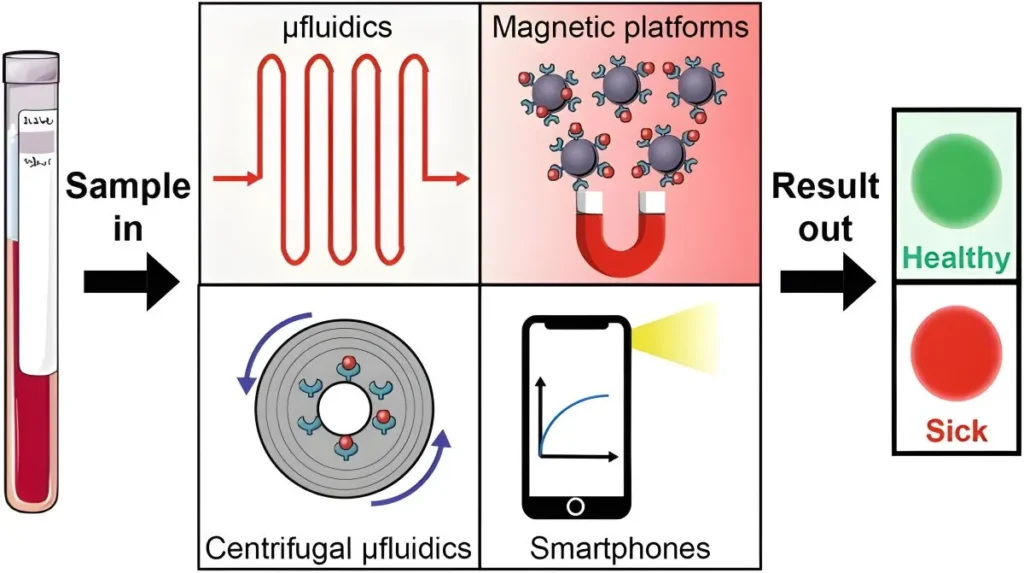
As the biotech sector evolves, the demand for faster, more affordable, and more accurate DNA sequencing tools is surging. At the core of this transformation are microfluidic biochips—precision-engineered platforms that enable automated sample handling at microscopic scales. This white paper explores how proprietary semiconductor manufacturing processes, are now being advanced by Pure Wafer Foundry Services to develop these advanced biosensing solutions. The result is a new era in biomedical diagnostics, drug discovery, genomics, and cancer research.
Introduction: From Moore’s Law to Medical Innovation
In 1965, Gordon Moore forecast that the number of transistors on an integrated circuit would double every two years—a prediction that became the driving principle behind microelectronics. This scaling enabled the development of complex semiconductor fabrication processes, including nanoscale lithography, thin-film deposition, and plasma etching.
These same innovations now serve the biotech industry, powering breakthroughs in lab-on-chip devices and DNA sequencing consumables. The convergence of life sciences and semiconductor engineering is accelerating progress in disease detection, drug development, and personalized medicine.
Microfluidics: The Engine Behind Genomic Tools
What Are Microfluidic Biochips?
Microfluidic biochips are lab-on-chip devices that manipulate very small volumes of fluids in precisely designed channels and chambers. These devices:
- Handle microliters to nanoliters of samples.
- Enable parallel processing of DNA, RNA, or proteins.
- Serve as “consumables” in high-throughput sequencing instruments.
Why They Matter
Traditional sample preparation for DNA sequencing is labor-intensive and costly. Microfluidic chips automate and miniaturize this process, reducing:
- Manual steps
- Material consumption
- Processing time
By using 25mm × 75mm slides or full 200mm–300mm silicon wafers, manufacturers can scale data output while driving down operational costs.
From Semiconductors to Biochips
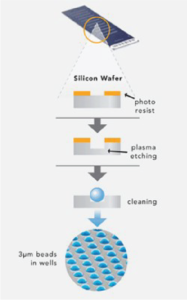
Today, Pure Wafer Foundry Services applies its proprietary semiconductor processing platform to fabricate complex microfluidic structures. Using:
- Dielectric and metal thin films
- Photolithography
- Reactive ion etching (RIE)
- Wafer bonding and dicing
Pure Wafer produces biochips that biotech manufacturers integrate into sequencing systems.
A Scalable Workflow
Delivery – Pure Wafer Foundry Services provides high-yield consumables ready for instrument use.
Wafer Processing – Pure Wafer Foundry Services uses semiconductor-grade cleanroom methods.
Design Phase – Pure Wafer Foundry Services partners with biotech firms to define fluidic architecture.
Slide/Disk Fabrication – Package as 25x75mm slides or full-wafer devices.
Application Areas and Industry Impact
Accelerated Disease Diagnosis
- Enables point-of-care diagnostics for faster, more accurate results.
- Improves patient outcomes through early-stage detection (e.g., 90% cancer survival at Stage 1).
Drug Discovery & Personalized Medicine
- Supports high-throughput screening for therapeutic compounds.
- Helps personalize treatment based on genomic markers.
Genomics & Proteomics
- Enhances throughput and resolution in sequencing studies.
- Facilitates studies of DNA-protein interactions.
Cancer Research
- Enables circulating tumor cell isolation.
- Improves profiling and tumor microenvironment studies.
Organ-on-a-Chip Technology
- Simulates human organs for toxicology, disease modeling, and drug testing.
- Reduces reliance on animal testing.
Economic Benefits of Microfluidic Biochips
| Metric | Early Detection (Stage 1) | Late Detection (Stage 4) |
| 5-Year Survival Rate | ~90% | <25% |
| Therapy Cost Ratio | 1x | 2.5x |
The miniaturization and automation enabled by semiconductor-based microfluidics significantly lower overall sequencing costs, reduce reagent use, and increase laboratory throughput.
Future Outlook: Biochips at Scale
The growing demand for personalized healthcare and population-wide genomic studies will push microfluidic platforms into widespread adoption. Pure Wafer Foundry Services expertise in scalable semiconductor processing positions it as a key enabler of this growth.
Key Trends:
- Multi-sample, high-density chip formats
- Increased adoption in clinical settings
- Integration with AI-powered diagnostic platforms
Conclusion
The synergy between semiconductor microfabrication and life science innovation is transforming the future of medicine. By repurposing the precision, scalability, and reliability of chipmaking processes, Pure Wafer Foundry Services is helping biotech companies bring faster, cheaper, and more accessible DNA sequencing solutions to market. This convergence is enabling a new class of diagnostic tools that promise to reshape disease prevention, treatment, and biomedical research.
Contact Information
To learn more about Pure Wafer Foundry Services microfluidic device solutions:
📧 Carol Pabon — carol.pabon@purewafer.com
📧 General Inquiries — foundry.services@purewafer.com
🌐 Website — https://purewafer.com